

Hey there! As a supplier of project lamp housings, I often get asked about the throw distance of these housings. It's a crucial factor, especially when you're setting up lighting for various applications, whether it's for outdoor landscapes, indoor events, or commercial spaces. So, let's dive right into what throw distance is and how it relates to our project lamp housings.
What is Throw Distance?
Throw distance, in simple terms, is the distance from the light source (in this case, the lamp inside our housing) to the surface where the light lands. It determines how far the light can effectively reach and illuminate an area. A shorter throw distance means the light will cover a smaller, more concentrated area, while a longer throw distance spreads the light over a larger space.
Think of it like a flashlight. When you're close to an object, the light creates a bright, small circle. But as you move the flashlight farther away, the circle gets bigger, but the light becomes less intense. The same principle applies to our project lamp housings.
Factors Affecting Throw Distance
Several factors influence the throw distance of a project lamp housing.
1. Lamp Power
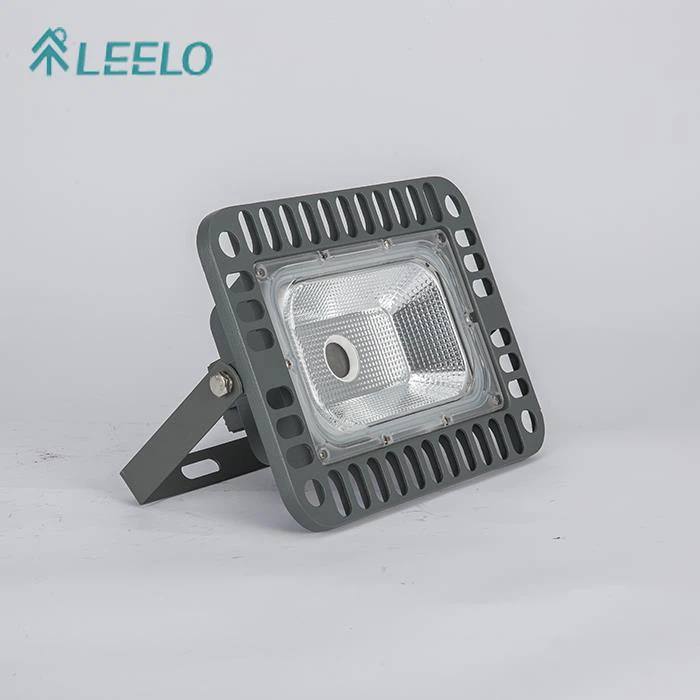
The power of the lamp is a major determinant. Generally, higher - wattage lamps can project light over a greater distance. For example, a 20W lamp will have a shorter throw distance compared to a 100W or 500W lamp. Our 20W 30W 50W Outdoor Aluminum COB LED Flood Light Projector IP66 Lamp Housing is great for smaller areas like garden paths or small signage. On the other hand, our 100W to 500W Die Casting Aluminum Outdoor LED Housing for Flood Light can be used for larger outdoor areas such as sports fields or large building facades.

2. Lens Type
The lens of the lamp housing also plays a significant role. Different lenses have different beam angles. A narrow - beam lens focuses the light into a tight beam, allowing it to travel farther. In contrast, a wide - beam lens spreads the light over a larger area but reduces the throw distance. Some of our project lamp housings come with adjustable lenses, so you can customize the beam angle according to your needs.
3. Reflector Design
The reflector inside the housing helps direct the light. A well - designed reflector can increase the throw distance by concentrating and focusing the light in a specific direction. Our 2017 New Design 50W 100W Die Cast Aluminum LED Flood Light Housing Only LEELO Brands features an optimized reflector design to enhance the throw distance and overall lighting performance.
4. Environmental Conditions
The environment where the lamp is used can affect the throw distance. In foggy, dusty, or rainy conditions, the light can be scattered and absorbed, reducing the effective throw distance. Outdoor applications need to take these factors into account when choosing the right project lamp housing.
Calculating Throw Distance
Calculating the throw distance accurately can be a bit tricky as it depends on multiple variables. However, a general rule of thumb is that for a floodlight, you can estimate the throw distance based on the lamp's wattage and the desired illuminance level.
For example, if you want to illuminate a sign at a certain brightness, you need to consider the sign's size and the required lux level (a unit of illuminance). You can then use the lamp's luminous flux (measured in lumens) and the inverse - square law to estimate the throw distance. The inverse - square law states that the illuminance is inversely proportional to the square of the distance from the light source.
Let's say you have a 100W lamp with a luminous flux of 10,000 lumens. If you want an illuminance of 100 lux on a surface, you can use the formula (E=\frac{\Phi}{4\pi d^{2}}) (where (E) is the illuminance in lux, (\Phi) is the luminous flux in lumens, and (d) is the distance in meters) to calculate the approximate throw distance.
Choosing the Right Project Lamp Housing Based on Throw Distance
When you're in the market for a project lamp housing, it's essential to consider the throw distance requirements of your application.
If you're lighting up a small backyard or a patio, a lower - wattage housing with a shorter throw distance will suffice. Our 20W - 50W housings are perfect for such applications. They are energy - efficient and provide enough light for these smaller areas.
For large outdoor spaces like stadiums or warehouses, you'll need a high - wattage housing with a long throw distance. Our 100W - 500W die - casting aluminum housings are designed to meet these demands. They can project light over long distances and provide uniform illumination across a large area.
Importance of Throw Distance in Different Applications
1. Outdoor Landscape Lighting
In outdoor landscape lighting, the throw distance helps create different lighting effects. You can use short - throw lights to highlight specific features like plants or sculptures, while long - throw lights can be used to illuminate large areas like lawns or gardens. This combination adds depth and visual interest to the landscape.
2. Commercial Lighting
In commercial settings such as retail stores or offices, the throw distance affects the overall lighting quality. Properly chosen project lamp housings with the right throw distance can ensure that products are well - lit, and employees have a comfortable working environment.
3. Event Lighting
For events like concerts or weddings, the throw distance is crucial for creating the right atmosphere. Long - throw lights can be used to light up the stage, while short - throw lights can be used for mood lighting around the venue.
Conclusion
Understanding the throw distance of a project lamp housing is essential for getting the most out of your lighting system. As a supplier, we offer a wide range of project lamp housings with different wattages, lens types, and reflector designs to meet your specific throw distance requirements.
Whether you're a homeowner looking to spruce up your outdoor space or a business owner in need of commercial lighting solutions, we have the right product for you. Don't hesitate to reach out if you have any questions about choosing the right project lamp housing based on throw distance. We're here to help you make the best decision for your lighting needs. Contact us today to start the procurement process and discuss your requirements!
References
- "Lighting Handbook: Reference and Application", Illuminating Engineering Society of North America.
- "LED Lighting Technology: Advances and Applications", CRC Press.