

Hey there! As a supplier of 50w die cast housing, I often get asked about the hardness of these housings. So, I thought I'd write this blog to shed some light on the topic.
First off, let's talk about what hardness means in the context of a 50w die cast housing. Hardness is a measure of a material's resistance to localized deformation, like indentation, scratching, or wear. In the case of our 50w die cast housings, hardness is super important because these housings need to withstand a lot of stuff in real - world use.

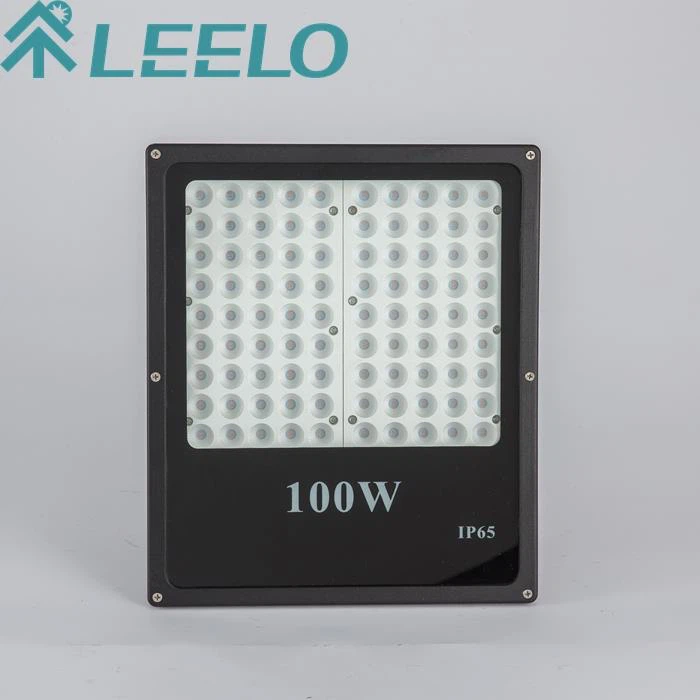
Most of our 50w die cast housings are made from aluminum alloys. Aluminum is a popular choice for die casting because it's lightweight, has good thermal conductivity, and can be easily formed into complex shapes. But what about its hardness?
The hardness of an aluminum alloy die cast housing depends on several factors. One of the key factors is the alloy composition. Different aluminum alloys have different amounts of other elements like copper, magnesium, silicon, and zinc. For example, an aluminum - copper alloy might have a different hardness compared to an aluminum - magnesium alloy.
Another factor that affects hardness is the heat treatment process. Heat treatment can significantly change the internal structure of the aluminum alloy, which in turn affects its hardness. We use specific heat treatment methods to achieve the right balance of hardness and other properties like strength and ductility.
We typically measure the hardness of our 50w die cast housings using the Brinell hardness test or the Rockwell hardness test. The Brinell test involves pressing a hard ball into the surface of the material and measuring the diameter of the indentation. The Rockwell test, on the other hand, measures the depth of penetration of an indenter under a specific load.
For our 50w die cast aluminum housings, the hardness usually falls within a certain range. On the Brinell scale, it can be anywhere from around 50 to 100 Brinell hardness number (BHN), depending on the alloy and the heat treatment. On the Rockwell scale, it might be in the range of 20 - 50 HRB (Rockwell B scale).
Now, why does this hardness matter? Well, a housing with the right hardness can protect the internal components of the 50w device it encloses. It can resist scratches and dents that might occur during handling, installation, or normal use. This is especially important for outdoor applications where the housing is exposed to harsh environmental conditions.
Let me give you some examples of where our 50w die cast housings are used. They are often used in LED lighting fixtures. For instance, IP65 Outdoor 100W Waterproof High Power LED Flood Light Industrial Fixtures Housing Parts need a housing that can withstand the elements, like rain, dust, and UV rays. The hardness of our die cast housing ensures that it doesn't get damaged easily, which in turn protects the LED components inside.
Another example is the 200W Nano Aurora COB Flood Light Housing Leelo Lighting. These high - power flood lights are used in industrial and commercial settings. The die cast housing needs to be hard enough to resist impacts from accidental bumps or debris, while still being lightweight for easy installation.
And then there's the High Brightness Aluminum Housing Nano Flood Light Smd Chips 20W with 2years Warranty. The hardness of the housing here is crucial for maintaining the integrity of the SMD chips and ensuring the long - term performance of the flood light.
When it comes to manufacturing our 50w die cast housings, we have a strict quality control process. We test the hardness of each batch of housings to make sure they meet our standards. If the hardness is too low, the housing might be too soft and prone to damage. If it's too high, the housing could become brittle and more likely to crack under stress.
We also work closely with our customers to understand their specific requirements. Some customers might need a housing with a higher hardness for more demanding applications, while others might prioritize other properties like weight or cost. We can adjust the alloy composition and the heat treatment process to meet these different needs.
In addition to hardness, we also consider other properties of the die cast housing. For example, the surface finish is important. A smooth surface finish not only looks better but also helps in preventing the accumulation of dirt and moisture. We use different finishing techniques like anodizing or powder coating to improve the surface properties of the housing.
Thermal conductivity is another important property. Since our 50w die cast housings are often used in LED lighting, they need to dissipate heat effectively. Aluminum has good thermal conductivity, but we can further optimize it through the design of the housing and the choice of alloy.
So, if you're in the market for a 50w die cast housing, you can see that hardness is just one of the many factors to consider. But it's a crucial one that can have a big impact on the performance and durability of your product.
If you're interested in learning more about our 50w die cast housings or want to discuss your specific requirements, don't hesitate to reach out. We're always happy to have a chat and see how we can help you with your project. Whether you're a lighting manufacturer, an electronics company, or anyone else in need of a high - quality die cast housing, we've got you covered.
Let's work together to find the perfect 50w die cast housing solution for you!
References
- "Aluminum Alloys: Structure and Properties" by John E. Hatch
- "Die Casting Handbook" by J. Campbell