

As a supplier of 50w die cast housing, I understand the significance of achieving an excellent surface finish for our products. A high - quality surface finish not only enhances the aesthetic appeal of the housing but also improves its durability and corrosion resistance. In this blog, I will share some effective methods to improve the surface finish of 50w die cast housing.
1. Material Selection
The choice of material is the first and most fundamental step in determining the surface finish of the die - cast housing. Aluminum alloys are commonly used for 50w die cast housing due to their lightweight, good thermal conductivity, and excellent castability. For a better surface finish, we should select alloys with low impurity content. Impurities such as iron, silicon, and copper in high concentrations can cause surface defects like porosity and inclusions.
For example, an aluminum alloy with a high silicon content may lead to a rough surface because silicon particles can protrude during the casting process. On the other hand, alloys with a proper balance of elements can ensure a smoother surface. We often use specific aluminum alloys that are formulated to optimize the casting process and surface quality. By carefully choosing the right alloy, we can lay a solid foundation for a high - quality surface finish.
2. Die Design and Maintenance
The design of the die plays a crucial role in the surface finish of the die - cast housing. A well - designed die can ensure uniform filling of the molten metal, which is essential for a smooth surface. The gating system, for instance, should be designed in such a way that the molten metal flows into the die cavity evenly without causing turbulence. Turbulence can trap air and oxide films in the metal, resulting in surface porosity and other defects.
In addition to the gating system, the die's surface finish itself also affects the final product. A polished die surface will transfer its smoothness to the cast part. Regular maintenance of the die is necessary to keep its surface in good condition. Over time, the die may wear out, and its surface may become rough due to the high - pressure casting process. By regularly polishing and inspecting the die, we can prevent surface defects on the cast housing.
3. Casting Process Optimization
The casting process parameters need to be carefully controlled to improve the surface finish. The temperature of the molten metal is a critical factor. If the temperature is too high, the metal may react more vigorously with the die surface, leading to corrosion and surface roughness. Conversely, if the temperature is too low, the metal may not flow properly, resulting in incomplete filling and cold shuts on the surface.
The injection speed and pressure also have a significant impact on the surface quality. A high injection speed can cause splashing and turbulence, while a low speed may lead to slow filling and solidification problems. We need to find the optimal injection speed and pressure for each specific die - cast housing design. By fine - tuning these parameters, we can achieve a more consistent and smooth surface finish.
4. Post - Casting Treatments
After the casting process, post - casting treatments can further enhance the surface finish of the 50w die cast housing. One common method is shot blasting. Shot blasting involves propelling small metal or ceramic particles at high speed onto the surface of the cast part. This process can remove surface impurities, scale, and burrs, and at the same time, it can also improve the surface hardness and smoothness.
Another effective post - casting treatment is chemical polishing. Chemical polishing uses chemical solutions to dissolve a thin layer of the metal surface, leveling out any minor irregularities. This process can give the housing a mirror - like finish. Anodizing is also a popular choice for aluminum die - cast housings. Anodizing creates a protective oxide layer on the surface, which not only improves the corrosion resistance but also provides a smooth and uniform appearance.

5. Quality Control
Implementing a strict quality control system is essential to ensure that the surface finish of the 50w die cast housing meets the required standards. We use various inspection methods, such as visual inspection, surface roughness measurement, and non - destructive testing. Visual inspection can quickly identify obvious surface defects like cracks, porosity, and inclusions.
Surface roughness measurement using instruments like profilometers can provide quantitative data on the smoothness of the surface. Non - destructive testing methods, such as ultrasonic testing and X - ray inspection, can detect internal defects that may affect the surface finish in the long run. By regularly inspecting the products at different stages of the production process, we can identify and correct any issues promptly, ensuring that only high - quality products are delivered to our customers.
Examples of Our High - Quality Products
We have a wide range of die - cast housing products with excellent surface finishes. For instance, our High Efficient Aluminum Ultra Slim 30W Outdoor Nano LED Flood Light Housing is designed with the latest die - casting technology and post - casting treatments to ensure a smooth and durable surface. It can withstand harsh outdoor environments while maintaining its aesthetic appeal.
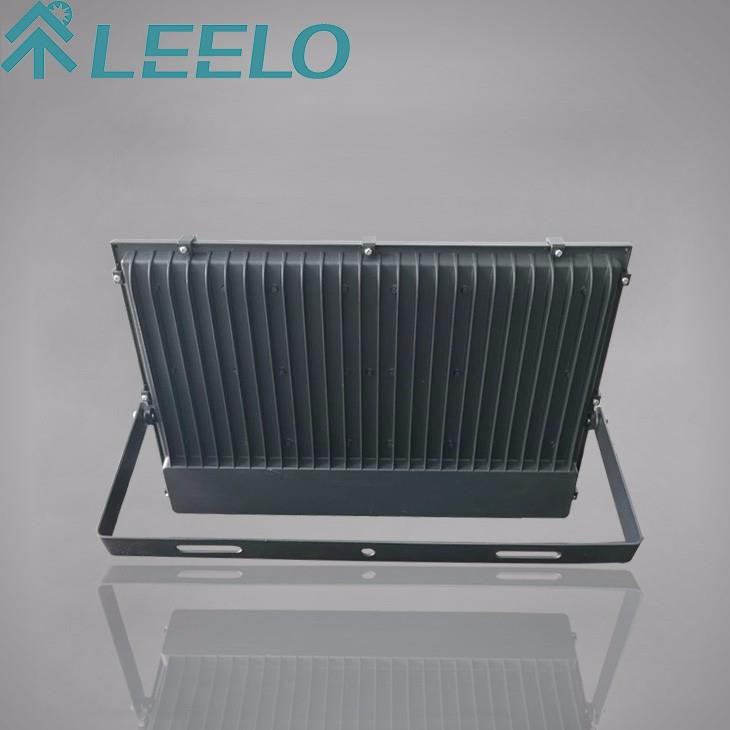
Our New Design LED Flood Light Lamp Shell 50W Die Cast Light Housing without Driver and LED Chips is another example. The surface finish of this housing is carefully crafted to meet the high - end requirements of the lighting industry. It not only looks great but also provides excellent heat dissipation due to its well - designed structure.
We also offer the 200W Nano Aurora COB Flood Light Housing Leelo Lighting. This product showcases our commitment to providing high - quality die - cast housings with superior surface finishes. The smooth surface not only enhances the overall appearance of the floodlight but also contributes to its long - term performance.
Conclusion
Improving the surface finish of 50w die cast housing requires a comprehensive approach that includes material selection, die design and maintenance, casting process optimization, post - casting treatments, and strict quality control. By paying attention to every detail in the production process, we can ensure that our die - cast housings have a high - quality surface finish that meets the expectations of our customers.
If you are interested in our 50w die cast housing products or want to discuss your specific requirements, please feel free to contact us for procurement and negotiation. We are committed to providing you with the best products and services.
References
- Campbell, J. (2003). Castings. Butterworth - Heinemann.
- Groover, M. P. (2010). Fundamentals of Modern Manufacturing: Materials, Processes, and Systems. Wiley.
- Kalpakjian, S., & Schmid, S. R. (2013). Manufacturing Engineering and Technology. Pearson.